

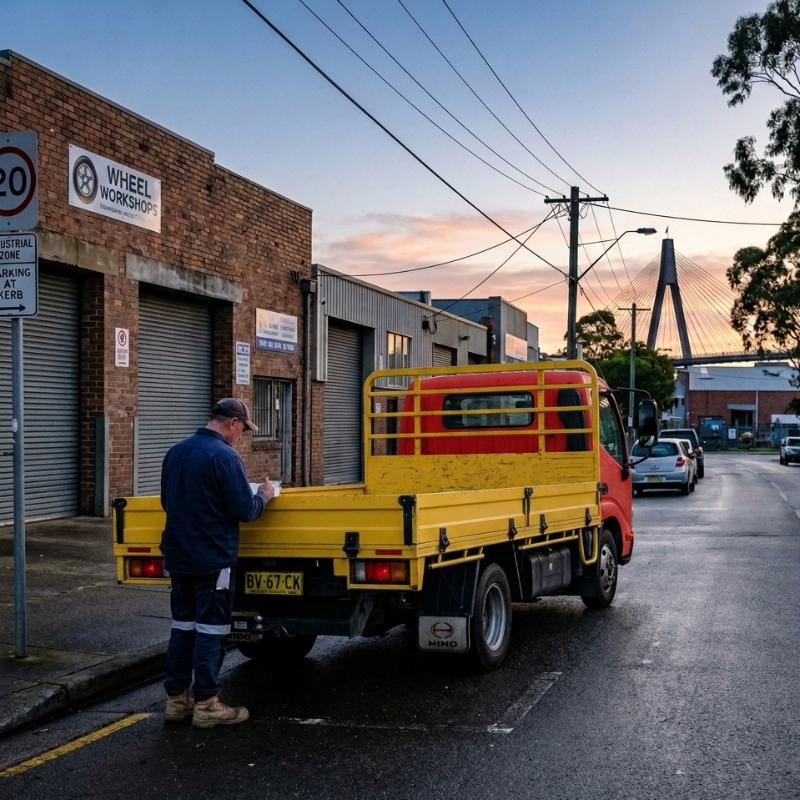
Sydney is full of “work vehicles” that look deceptively normal: courier vans with fit-outs, small moving trucks, community minibuses, and trade vehicles towing equipment—exactly the kinds of vehicles that often prompt people to consider an LR licence. The most common mistake new drivers make is thinking the rules are based on size.
In NSW, what matters is what the vehicle is rated to carry and how it’s configured. Once you understand a handful of terms (GVM, GCM, ATM) and one key threshold (4.5 tonnes), you can stop guessing and start checking.
This guide is written for people moving from a car licence into work vehicles, with a clear focus on the most common first heavy-vehicle step drivers aim for: LR (Light Rigid).
The 4.5-tonne line that clears up most confusion
If you remember only one thing, make it this:
- 4.5 tonnes is the big threshold that often separates “light vehicle” thinking from “heavy vehicle” thinking.
- Once a vehicle (or certain trailer combinations) sits over that line by its legal ratings, different rules and licence classes start to apply.
That’s why so many Sydney drivers run into LR conversations when they move into delivery, trade support, community transport, facilities work, and similar roles.
Q&A: Is it the vehicle’s actual weight today, or the rating, that matters?
It’s the rating you must check first. A vehicle can be empty today but still be rated to operate at a higher maximum legal weight when loaded. That rating is what drives licensing and compliance questions.
The “weight language” you’ll see on compliance plates and paperwork
You don’t need to be an engineer. You just need to know what these acronyms mean when you see them.
- • GVM (Gross Vehicle Mass): The maximum the vehicle is allowed to weigh when fully loaded (vehicle + people + fuel + cargo + equipment).
- Tare: The vehicle’s weight when empty (or close to empty).
- Payload: How much weight you can add (roughly: GVM minus tare).
- GCM (Gross Combination Mass): The maximum allowed weight of the vehicle and what it’s towing combined.
- ATM (Aggregate Trailer Mass): A trailer’s maximum allowable mass when loaded.
If you’re driving a rigid work vehicle, GVM is usually the first number to care about. If you’re towing, GCM and ATM quickly become just as important.
Q&A: What’s the difference between GVM and GCM in real life?
Think of it this way:
- GVM answers: “How heavy can the vehicle be when it’s loaded?”
- GCM answers: “How heavy can the vehicle and trailer be together when everything is loaded?”
You can be under GVM but still be over GCM once you hook up a loaded trailer.
How to check a vehicle’s ratings without guessing
Never rely on “it looks small enough” or “someone at work said it’s fine”.
Check in this order:
- Find the compliance plate (often inside the driver’s door area/jamb, sometimes in the engine bay or glovebox area depending on the vehicle)
- Confirm the numbers on rego papers or fleet documentation
- If the vehicle is modified (tail lift, refrigeration unit, tool body), assume ratings matter even more and double-check what you’re looking at
In Sydney fleets, it’s common to see vehicles that look similar but have different ratings due to different bodies, axles, or manufacturer specs.
Car licence vs work vehicles: what actually changes?
A car licence (Class C) covers a lot of everyday work driving, but once you step into heavier-rated vehicles, you’re often moving into heavy vehicle licence classes.
There are also two “gotchas” that surprise people:
- Passenger capacity (especially in minibuses)
- Towing and combinations (where trailer ratings and combination mass limits can bite)
If you want the official NSW breakdown of licence classes in one place, bookmark the NSW Government overview and refer back whenever you’re unsure: NSW Government licence classes
Why does LR come up so often when people start driving work vehicles
When people say “I’m thinking about LR,” they’re usually saying:
- “I’m moving into work vehicles that feel bigger than a car/van.”
- “I want to keep options open for common rigid work vehicles.”
- “I want a sensible first step before thinking about larger rigid or combination vehicles.”
LR is widely seen as an entry point into heavier work vehicles because it’s a practical bridge between car handling habits and the realities of commercial vehicle control (space, clearance, mirrors, braking distance, weight awareness).
If you’re ready to move from a car licence into heavier work vehicles, it helps to understand what’s involved when you upgrade to an LR licence and why LR is such a common first step.
Q&A: Does LR replace my car licence privileges?
In practice, higher licence classes generally don’t take away your ability to drive ordinary vehicles. The key is that the higher class gives you additional privileges for vehicles in that category, as long as you still comply with conditions and road rules.
Sydney scenarios: how to think through common “Can I drive this?” questions
The best way to understand vehicle weight classes is to run simple real-life scenarios.
Scenario 1: “I’m driving a small moving truck for a job”
Don’t assume. Two moving trucks can look similar, but sit in different categories by rating.
Check:
- The compliance plate for GVM
- Whether the truck is fitted with a tail lift (often a heavier setup)
- Whether you’ll be towing anything (then check GCM as well)
Scenario 2: “It’s a work van, but it’s fully kitted out”
Fit-outs add weight and can change what “safe payload” looks like, even if the licence category doesn’t change. You want to avoid:
- Overloading
- Poor weight distribution
- Assuming you can load “whatever fits”
Scenario 3: “I’m driving a minibus for a community group”
For passenger vehicles, capacity can matter as much as weight.
Check:
- Seating capacity (and how it’s counted)
- The vehicle’s ratings
- Any conditions attached to the work (for example, if it’s commercial passenger transport, extra requirements may apply beyond licence class)
Q&A: If the booking sheet says “12-seater,” is that enough information?
No. Always confirm the vehicle’s actual seating configuration and how it’s recorded. Don’t rely on labels used for marketing or scheduling.
The towing trap: how people accidentally step outside their limits
Towing is where otherwise careful drivers can get caught out.
You need to consider:
- The trailer’s ATM
- The vehicle’s towing limit
- The combination’s GCM
- The actual loaded weight of the trailer (not just the empty trailer)
Even if your day-to-day job is “just metro work,” Sydney businesses often add towing as “one quick job” that turns into a compliance headache if nobody checks the ratings first.
Q&A: If I’m only towing a small trailer, do I still need to worry?
Yes. “Small” is not a legal category. A trailer can be physically small and still be heavy when loaded. The only safe habit is: check the ratings, then check the load.
A simple ladder for moving from a car licence to work vehicles
A lot of Sydney drivers do better when they stop thinking in terms of “I want the biggest licence” and start thinking in terms of “What will I actually drive for work?”
A sensible ladder looks like this:
- Start with the vehicles you’ll drive in the next 6–18 months
- Match the licence step to those vehicles
- Build confidence and competence before moving into larger, rigid, or combination vehicles
If you’re weighing up which pathway makes sense for your goals, this overview on choosing the right licence class for work can help you line up vehicle types with the right licence step.
Q&A: Should I skip LR and jump straight to a higher class?
Sometimes people try to jump ahead to “save time,” but it can backfire if your first role uses a different vehicle type than you trained for. For most drivers, the best path is the one that matches the vehicles you’ll actually drive first.
The “before you drive for work” checklist (print this in your head)
Before you take a set of keys for a work vehicle, do this:
- Check the compliance plate for GVM
- If towing: confirm ATM (trailer) and GCM (combination)
- Confirm passenger seating capacity if it’s a bus/minibus
- Check whether the vehicle is rigid or a combination configuration
- If modified (tail lift, refrigeration, tool body), double-check ratings and loading assumptions
- If anything is unclear, pause and confirm before driving
This checklist prevents the most common mistake: trusting the vehicle’s appearance instead of its legal ratings.
Keeping it LR-focused without turning it into a service page
If LR is your likely next step, the smartest way to approach it is to focus on the skills and knowledge that make LR driving safer and easier in Sydney traffic.
That means:
- Mirror use and scanning habits (especially lane changes and merging)
- Turning path and rear swing awareness (kerbs, posts, parked cars)
- Height awareness (low structures, car parks, older industrial areas)
- Smooth braking and bigger following distances
- Loading basics so the vehicle behaves predictably
And if you’re close to taking action, these practical pointers on preparing for an LR licence upgrade will help you focus on the checks and skills that matter most before you step up.
Common misconceptions that cause real problems
“My boss said it’s fine, so it must be legal”
Your workplace can be supportive and still be wrong. You’re the one driving, so you should personally check the ratings and make sure your licence class covers the vehicle.
“Tare weight is what matters”
Tare is useful, but it’s not the main compliance number people think it is. Most “what can I legally drive?” questions come back to the maximum rated mass (GVM) and, if towing, the combination limits (GCM/ATM).
“It’s only around the corner”
Distance doesn’t change the rules. A short trip in the wrong category is still the wrong category.
“It’s basically just a big van”
“Looks like” doesn’t matter. Ratings do.
FAQ: NSW vehicle weight classes with an LR focus
What’s the first number I should check on a work vehicle?
Start with GVM on the compliance plate. If you’re towing, also check GCM for the vehicle and ATM for the trailer.
What’s the quickest way to verify NSW licence class definitions?
Use the official NSW Government overview of licence classes and refer back whenever you’re unsure about categories or wording.
Why do people moving into work vehicles often focus on LR?
Because LR is commonly seen as a practical first step into heavier-rated rigid vehicles used in day-to-day metro work. It’s a bridge between car driving habits and commercial vehicle driving realities.
Does towing change what I’m allowed to drive?
It can. Towing introduces trailer mass (ATM) and combination mass limits (GCM). It’s one of the easiest ways to accidentally operate outside limits if you don’t check ratings.
If a vehicle is empty, can it still require a higher class?
Yes. Licensing questions are driven by the vehicle’s legal ratings, not only its weight at that exact moment.
What should I do if the compliance plate is missing or unreadable?
Don’t guess. Ask for the correct documentation (rego papers, fleet documentation, manufacturer info) or confirm with someone responsible for vehicle compliance before driving.