

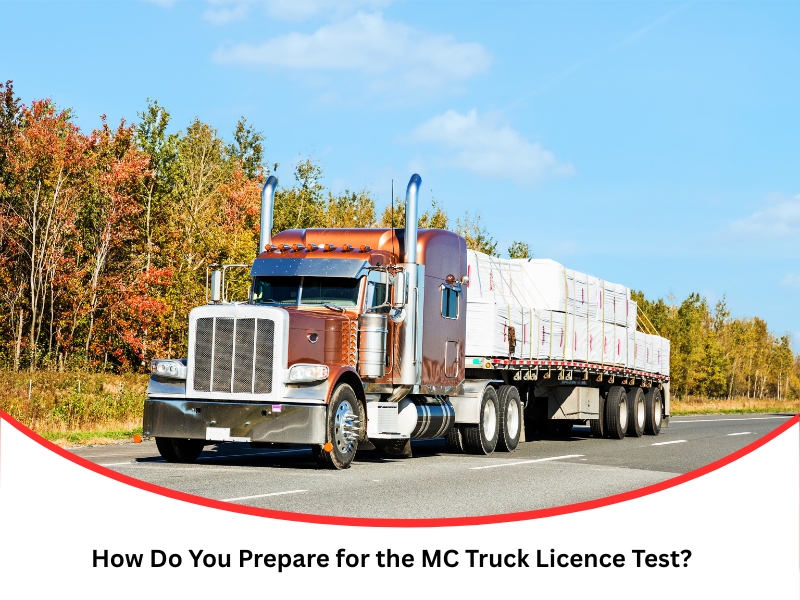
Train your mind and skills ahead of the exam, especially when nerves and technical details matter. You’ll face specific performance expectations, system checks, and strict criteria. You must understand each phase, from pre-trip inspection through coupling, on-road driving, reversing and uncoupling. This article explores how to prepare confidently for the MC truck licence test and build habits that improve your chances of passing the first time.
Why do drivers often fail the MC truck licence test on the first try?
Most failed attempts happen because candidates underestimate how strict and detailed the test process is. Many drivers skip minor steps or rush their performance, which results in lost points. Pre-trip inspections are a common downfall. Even experienced drivers can make small procedural errors that snowball quickly during testing. Common failure triggers include:
- Skipping important safety or pre-trip inspection steps under pressure or poor preparation
- Misaligning the trailer when reversing due to rushed judgment and poor mirror positioning
- Missing brake or light checks during coupling due to distraction or nerves on the day
- Mishandling gears or braking too harshly, especially when operating on steep or narrow roads
Confidence in each task helps avoid these common slip-ups and boosts your overall result.
What challenges do drivers face in the MC truck licence test?
The test introduces complex driving challenges that require calm focus and fast adaptation in real time. Drivers are assessed in traffic conditions that often vary. Tight turns, uneven loads, and changing examiner cues make even simple tasks harder. You’ll need to manage risk while showing control. Key challenges include:
- Maintaining stable rig control during sharp turns in busy industrial or suburban testing zones
- Holding a safe lane position with an extended trailer while navigating unpredictable traffic flow
- Coordinating observation, mirrors, and trailer swing while changing direction in narrow streets
- Keeping clutch, brake, and accelerator in balance on gradients or in stop-start traffic
Some drivers overlook the cost factors involved in multi-combination licence training, but investing in proper instruction helps you handle these exact scenarios without losing points.

How does test anxiety affect performance during the MC truck licence test?
Test anxiety affects judgement, coordination, and confidence—even if you know the steps perfectly. Under pressure, your decision-making slows, your hands tense, and focus fades. If you’re not mentally prepared, you’ll make avoidable mistakes, especially during timed inspections and reversing sections. Helpful strategies to manage test-day nerves:
- Use deep breathing to lower heart rate and reset focus before each technical manoeuvre
- Break the test into small tasks mentally to reduce pressure and maintain performance
- Visualise each phase of the exam calmly before performing to reduce the risk of error
- Schedule mock tests that simulate examiner conditions and help minimise performance shock
Mental rehearsal is as crucial as driving practice when preparing for the MC licence test.
What role does training play in the MC truck licence test preparation?
Choosing a high-quality driving school matters. The right training sharpens your technique, builds safe habits, and prepares you to meet examiner expectations. Reputable schools offer real test vehicles, structured lessons, and targeted feedback that corrects errors before they become habits or cause test failure. Training benefits from a top-tier driving school include:
- Structured lessons aligned with test standards, covering every skill from inspection to uncoupling
- Trainers who correct unsafe habits early and help build strong driving routines
- Access to the same vehicle type and layout used during formal assessments
- Ongoing evaluations to monitor your progress and reinforce reliable test-ready behaviours
If you’re serious about passing, you should discover comprehensive training programs for heavy vehicle drivers offered by leading providers.
How can you build confidence before taking the test?
Confidence comes from familiarity. Repeating full test scenarios builds the control needed under pressure. Many drivers lose confidence after a few mistakes early on. Instead, focus on completing tasks consistently during practice so test day feels predictable and manageable. Ways to boost test confidence:
- Run full-length mock exams using timed sequences that mirror the official assessment format
- Create pre-drive and post-drive checklists to confirm correct routines without second-guessing
- Log performance data to spot weak areas and set measurable improvement targets each week
- Practice tasks with varied trailers, weights, and road types to broaden your comfort range
Confidence is earned through repeated, targeted effort—not hope or guesswork.

What skills are tested in the MC truck licence test?
The test covers inspection, reversing, road handling, coupling, and situational awareness under pressure.
Every action must be completed to standard without prompting. Examiners expect safe, smooth, and repeatable results—especially when conditions become challenging or instructions shift mid-test. Skill areas you’ll be tested on include:
- Executing a full pre-trip safety inspection, including brake test, air lines, and light checks
- Performing correct coupling and uncoupling steps without delay or unsafe shortcut techniques
- Reversing with full trailer control into angled spaces, guided only by mirror positioning
- Navigating urban traffic while maintaining consistent mirror checks, signalling, and lane control
- Shifting gears smoothly without stalling or jerking in uphill, downhill, and load-heavy scenarios
This reference table summarises the skill focus:
| Test Component | Preparation Focus | Goal Outcome |
| Inspection & Coupling | Safety systems and trailer checks | Smooth and consistent execution |
| On-road driving | Gear timing and traffic response | Controlled vehicle performance |
| Reversing | Angled and straight-line reversing drills | Minimum correction needed |
| Uncoupling tasks | Final checks and process adherence | Clear step-by-step precision |
If you’re unsure about the full scope, NSW outlines the steps involved in applying for a multi-combination vehicle licence, which includes eligibility and licensing requirements.
Which driving habits lead to a successful Multi Combination truck licence test?
Your everyday habits shape your test outcome. Examiners see when the technique is natural versus forced. The best drivers are those with consistent patterns—inspection in the same order, reversing with clear planning, and safe load handling without hesitation. Strong habits reduce mistakes under pressure. Habits that improve test performance:
- Repeat every pre-trip step in exact sequence to build a predictable inspection flow
- Use trailer-specific landmarks and mirror cues for reliable reversing every time
- Speak the coupling steps aloud during practice to memorise the correct process automatically
- Adjust braking and acceleration gently to maintain load stability across different terrains
It’s also worth knowing what requirements are needed for a truck licence, as this helps set clear goals during preparation and keeps your practice aligned with what examiners will expect on the day.
Final Thoughts
Preparing for the MC truck licence test is all about skill, structure, and repetition. Every successful candidate develops habits that reduce mental strain and allow for steady control under test conditions. Use your training time wisely, correct small errors quickly, and create a routine that holds under pressure. For step-by-step guidance, you can find out how Core Truck Driving School prepares students for success.