
The Multi-Combination licence sits right at the top of the heavy-vehicle ladder, and it is the one that unlocks the biggest rigs on the road. If you are an HC driver weighing up whether to go further, it helps to know exactly what an MC licence lets you drive and the work it opens up. Core Truck Driving School is a registered training organisation in NSW (RTO 45477), and this guide breaks down B-doubles versus road trains, the jobs each unlocks, and whether the upgrade is worth it. If you are ready to aim high, our MC (Multi-Combination) licence training in NSW is built for it.
| In short: A Multi-Combination (MC) licence in NSW lets you drive the largest combination vehicles, B-doubles and road trains. B-doubles are common on city and interstate freight runs, while road trains operate mainly on long rural and outback routes. An MC licence opens the highest-paying long-haul and linehaul driving jobs. |
What counts as a multi-combination vehicle?
A multi-combination vehicle is, in simple terms, a prime mover pulling more than one trailer, or a combination beyond what a Heavy Combination licence covers. That is what puts it in a class of its own. The two configurations most people picture are B-doubles and road trains, and while both are large combinations, they look and operate quite differently. Rather than get into specific length and mass limits, which are set by regulation and are best checked with Core or the National Heavy Vehicle Regulator, it is more useful to understand the shape of each and where it is used.
B-doubles
A B-double is a prime mover towing two trailers linked together, and it is a familiar sight on highways and around cities. B-doubles are the backbone of a lot of freight movement, carrying larger loads than a single-trailer combination while still being manageable on major roads and interstate routes. They are widely used, which is part of what makes an MC licence so employable.
Road trains
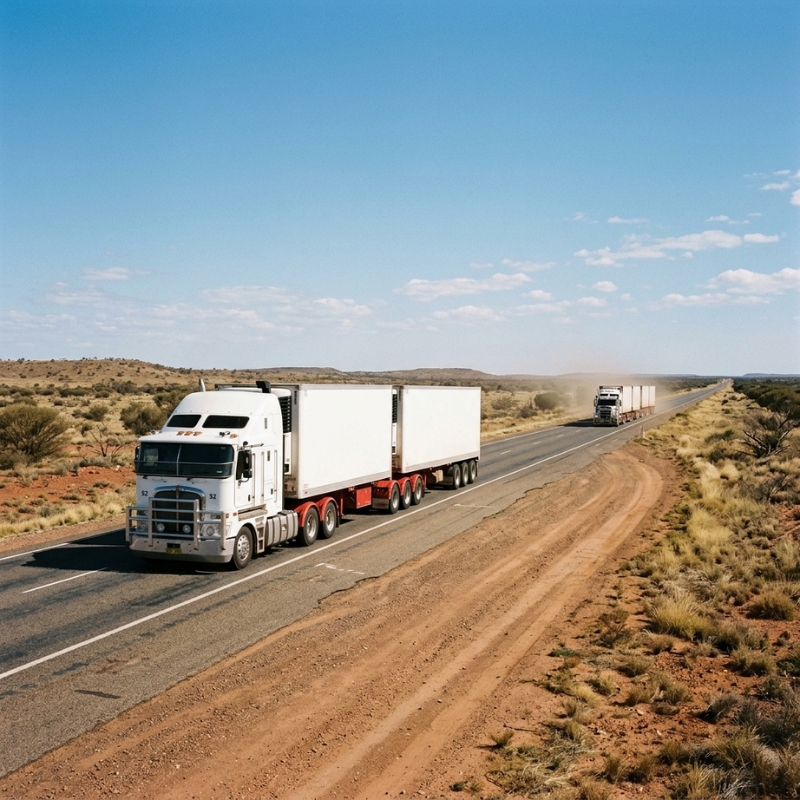
A road train takes the idea further, with a prime mover hauling multiple trailers, and they are the giants of Australian trucking. Because of their size, road trains operate mainly on long rural, remote and outback routes rather than in built-up areas. Driving one is a specialised skill suited to long-distance, regional and resource-sector work.
The jobs each unlocks
The real value of an MC licence is the range of high-end work it opens. B-double roles tend to centre on linehaul and interstate freight, moving goods between cities and depots on regular long-distance runs, which is steady, in-demand work. Road-train roles lean towards the outback, mining, agriculture and resource sectors, often on remote routes where few drivers are qualified to operate. Both sit at the top end of driving work, and MC drivers are consistently in demand precisely because the licence is the highest class and the vehicles demand skill and responsibility. For drivers who want the most options and the best-paid long-haul work, MC is the licence that gets you there, though actual pay varies with the role, employer and region.
HC to MC: is the upgrade worth it?
For many Heavy Combination drivers, MC is the logical next step, but whether it is worth it depends on the work you want. If you are drawn to linehaul, interstate freight, or remote and resource-sector driving, the upgrade opens doors that an HC licence does not, and it positions you at the top of the field. If your work is well served by an HC licence and you have no plans to move into the biggest combinations, there may be less urgency. Generally you progress to MC after gaining experience on a Heavy Combination licence, so if you are not there yet, building time on your Heavy Combination (HC) licence is the stepping stone. The assessment is competency-based, carried out on real multi-combination vehicles, so you build genuine skill on the rigs you will actually drive.
How Core trains MC drivers
Stepping up to the largest combinations calls for training on the real thing. Core trains MC learners through the Heavy Vehicle Competency Based Assessment on genuine multi-combination vehicles, so you develop real confidence handling the length, weight and manoeuvring these rigs demand. Whether your goal is interstate B-double linehaul or remote road-train work, we can prepare you for the assessment and talk through the pathway from where you are now. To discuss your MC upgrade, call Core on 1800 00 2673 or start with our MC (Multi-Combination) licence training in NSW.
Frequently Asked Questions
What can you drive with an MC licence?
An MC licence lets you drive the largest combination vehicles, including B-doubles and road trains. It is the highest heavy-vehicle class in NSW, sitting above a Heavy Combination licence, and it authorises combinations beyond what HC covers. This makes it the licence for top-end linehaul, interstate and remote long-haul driving work.
What is the difference between a B-double and a road train?
A B-double is a prime mover towing two linked trailers, common on highways and interstate freight runs. A road train hauls multiple trailers and is much larger, operating mainly on long rural, remote and outback routes. Both need an MC licence, but they suit different kinds of work and driving conditions.
Do I need HC before MC?
Generally, yes. The usual pathway is to gain experience on a Heavy Combination licence before progressing to Multi-Combination, since MC is the top class. If you do not yet hold HC, that is the stepping stone. Confirm the current requirements with Core or Transport for NSW, and we can help you plan the progression.
Are MC jobs well paid?
MC roles are generally among the better-paid driving jobs, because the licence is the highest class and the work, such as linehaul, interstate and remote long-haul, demands skill and responsibility. Actual pay varies by role, employer, region and hours, so treat it as strong earning potential rather than a fixed figure, and check current rates for the work you are after.
Reaching the top of the heavy-vehicle ladder
An MC licence is the top of the ladder, letting you drive B-doubles and road trains and opening the highest-paid long-haul and linehaul work in the country. B-doubles keep the freight moving between cities and states, while road trains handle the big remote runs. If that is the career you want, the upgrade from HC to MC is what gets you there. Core can train you on real multi-combination vehicles through our MC (Multi-Combination) licence training in NSW.
| Ready to reach the top licence? Talk to Core Truck Driving School (RTO 45477) on 1800 00 2673 or book your MC course. |