

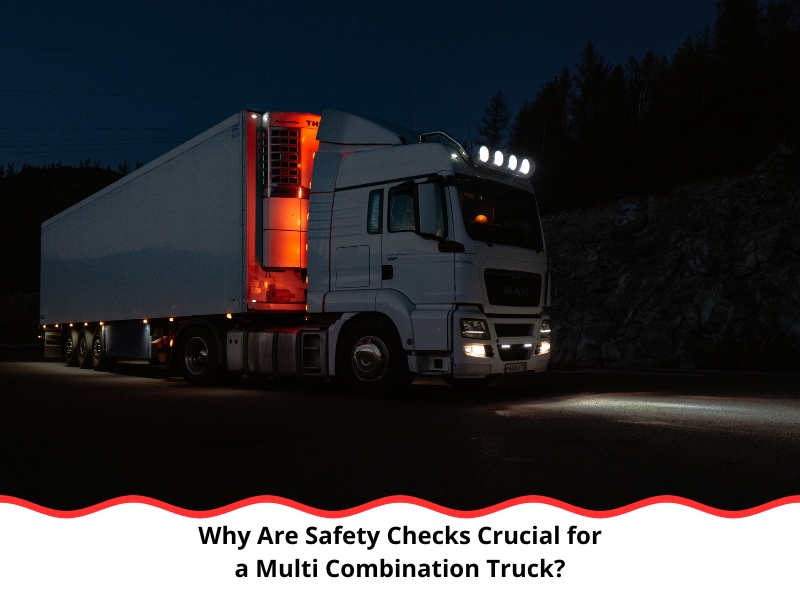
Safety checks are crucial because they prevent avoidable defects from turning a long haul into a roadside drama. A multi combination truck has more couplings, axles, and load points, so the risk multiplies when small issues slip through. Routine inspections protect people first, then schedules, assets, and your licence. They also stop costs from snowballing when a minor air leak becomes a tow and a missed delivery. Moreover, checks create predictable uptime and smoother audits, which keeps you out of strife when enforcement eyes are on you. With training and smart tools, the process takes less time than a fuel stop and saves hours later. There’s no magic—only a clear loop: inspect, record, repair, repeat, and roll. This article, explains how to build a reliable routine that keeps complex gear safe, compliant, and earning
What should every multi combination truck driver check before a trip?
Every trip starts best with a set routine that moves from tractor to trailers without skipping an axle. A disciplined walk-around catches defects where they begin, not after they’ve bitten hard at highway speed. Keep it simple, repeatable, and quick enough to do even when flat out. Here are the pre-trip inspection essentials:
- Tyres and wheels: Confirm pressures, look for cuts, bulges, missing valve caps, and hot hubs.
- Brakes and air lines: Listen for leaks, check slack adjusters, hoses, chambers, and park brake hold on each unit.
- Couplings and safety gear: Inspect fifth wheel jaws, kingpin, drawbar eyes, safety chains, and lock indicators; tug test.
- Lights and markers: Test all lamps, clearance markers, indicators, and reflective tape for clarity and function.
- Suspension and steering: Check airbags, leaves, hangers, shocks, ride height valves, and steering play.
- Load restraint: Inspect straps, chains, dogs, curtains, gates, and placards; confirm anchor points.
- Fluids and caps: Check oil, coolant, washer, and fuel caps; look for drips and stains under the set.
- In-cab systems: Test horn, wipers, demister, seatbelts, gauges, and warning lamps (ABS/EBS).
A quick table helps keep faults visible and fixable:
| Item | What to confirm | Common red flags | Action |
| Tyres & wheels | Even wear, correct PSI | Shoulder wear, loose nuts | Inflate/rotate/torque |
| Brakes | Air integrity, travel | Hissing, long pedal | Repair leaks, adjust |
| Couplings | Full lock & security | Partial latch, worn jaws | Re-seat, replace parts |
| Lights | All lamps on | Flicker, water ingress | Reseat, reseal |
| Suspension | Height & damping | Leaks, broken leaves | Replace components |
| Restraint | Rated and tight | Frayed straps, bent hooks | Swap and retension |
| Fluids | Levels & seals | Milky oil, low coolant | Service immediately |
In short, small, steady rituals prevent big headaches. Stick with one loop, touch components not only eyeball them, and defects won’t sneak past. The result is a set that feels planted and behaves when it matters.
How do pre-trip inspections prevent breakdowns and licence penalties?
Thorough inspections eliminate many roadside failures before keys turn. Early fixes cost less and protect schedules, while clean records show a safety culture that stands up to audits. Moreover, disciplined checks reduce defect notices that can snowball into compliance problems. Here are the risk-reduction levers:
- Early detection: Finding a cracked air hose in the yard avoids a breakdown under load.
- Documentation: Time-stamped photos and notes demonstrate due diligence during inspections.
- Defect escalation: Clear hand-offs to maintenance stop recurring issues.
- Prevention mindset: Drivers who treat warnings as “stop now” save licences and freight.
Training that reinforces hazard awareness pays off, too. Programs that build defensive habits and routine checks help create fewer roadside stoppages and reduce penalty risk across busy corridors.
Additionally, NSW endorses education that sharpens judgment; many drivers improve insight through safer driving courses for professional truck drivers. Use these frameworks to back your yard routine with proven techniques.
Why is maintaining a multi combination truck essential for road safety?

Inspections only work when maintenance turns notes into action. Tight servicing keeps braking, steering, and coupling components within spec, which preserves control during sudden stops and evasive steering. Furthermore, consistent maintenance smooths ride quality and improves load stability. Here are the maintenance pillars:
- Scheduled servicing: Align intervals with OEM recommendations and duty cycles.
- Replace in pairs: Tyres, shocks, and brake components to maintain balance.
- Quality control: Use rated parts; log torque settings and sign-offs.
- Trend analysis: Track repeated ABS/EBS faults by trailer ID and route.
- Records discipline: Close the loop from defect note to job completion.
- Road test protocol: Verify repairs under load and at highway speed.
If you want deeper practical routines without fluff, study truck maintenance for MC licence holders. Applying those patterns leads to lower tyre and brake wear, steadier handling, and fewer last-minute cancellations. Well-maintained sets feel predictable under pressure. Confidence rises, fuel economy improves, and compliance checks go smoother than a fresh road seal.
How does MC driver training improve multi combination truck safety?
Driver skill is the multiplier for complex gear. Purpose-built MC training sharpens coupling, reversing arcs, and hazard scanning under real pressure. As judgment grows, errors shrink, and risk drops. Here are the training outcomes to target:
- Coupling mastery: Repeat hook-ups until lock indicators are automatic.
- Reversing precision: Map trailer swing with cones before entering tight docks.
- Emergency drills: Practise hard stops and evasive moves with varied loads.
- Situational awareness: Read traffic layers, weather, and escape options.
- Fatigue calls: Plan breaks around circadian dips, not only distance.
For a credential that proves competency, consider a reliable MC licence upgrade program for professional drivers. A structured course with feedback loops often delivers greater driver confidence in busy metro corridors and remote stretches alike. Training makes good habits stick. It turns “near misses” into non-events and keeps attention sharp when the day gets long.
What technology helps modern drivers complete faster and safer inspections?
Technology shortens inspection time while boosting consistency. App-based checklists guide you step by step, then sync defects to the workshop for action. Telematics stream live fault codes, so surprises are rare. Here are the inspection tech tools:
- Digital checklists: Mandatory photos, GPS, and timestamps build credible records.
- TPMS and hub sensors: Detect leaks and heat before failures escalate.
- ABS/EBS analytics: Investigate imbalances and recurring interventions.
- Dashcams and AI alerts: Flag risky gaps and rolling-stop behaviours for review.
- Workshop integration: Raise jobs automatically from driver notes.
How can regular refresher courses keep multi combination truck operators compliant?
Rules evolve, equipment changes, and habits drift. Refresher training aligns skills with current standards and resets any shortcuts that crept in. As a result, audit findings improve, and enforcement interactions stay calm and brief. Here are the refresher focus areas:
- Load restraint updates: Apply the latest ratings and angles for different freight.
- New coupling systems: Understand lock indicators and failure modes across fleets.
- EBS variations: Read lamps, logs, and interventions specific to trailer families.
- Enforcement trends: Prepare records that inspectors expect to see first.
- Scenario drills: Recreate defects and escalation paths to test the admin chain.
For clarity on licensing pathways and oversight, it helps to understand the multi combination truck licence classes and inspections. This knowledge ensures operators stay current with eligibility rules, vehicle categories, and assessment standards when planning future training.
Final thoughts on responsible driving for a multi combination truck
Responsibility shows in the routine you repeat when no one’s watching. Build a tight pre-trip, write defects up straight away, and back judgment with helpful tech. Keep sharpening skills through targeted courses so decisions stay calm when conditions change. When planning next steps, align goals with routes, freight, and the set you drive. For tailored guidance at the right time, ask Core Truck Driving School about starting your MC licence upgrade; choose dates and outcomes that match the season, not the calendar. With that, trips run smoother than a Sunday arvo, and the licence stays tidy.