

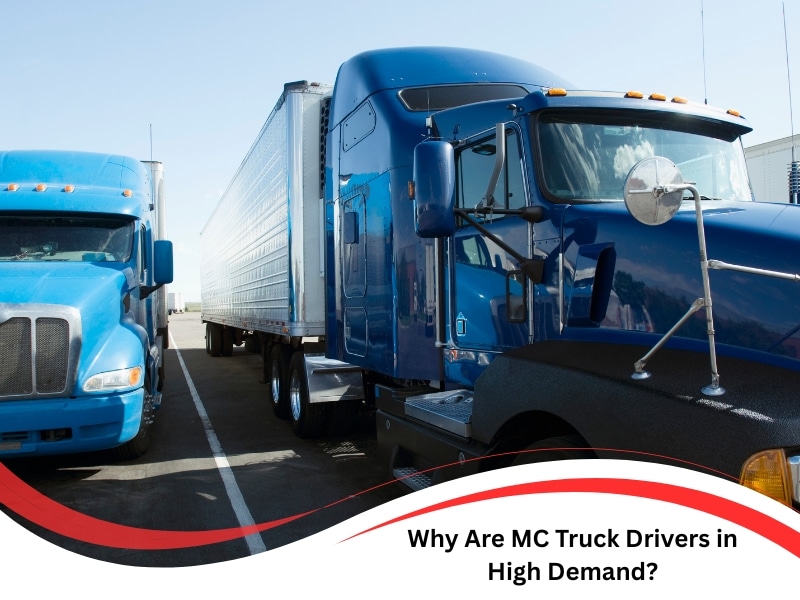
Australia’s freight and logistics sector is expanding rapidly, and that means MC truck drivers are no longer a nice‑to‑have—they are essential. With interstate routes, heavier load limits and stricter compliance rules, those holding an MC truck licence are being snapped up. Employers now view these drivers as skilled professionals able to navigate complex vehicles, manage regulatory demands and deliver on tight schedules. This article explores the major forces driving the demand for MC truck drivers today and explains how you can get on board.
What qualifications are needed to become an MC truck driver?
To embark on a career as an MC truck driver, you must hold a valid heavy‑vehicle licence and complete the specialist training for multi‑combination vehicles. The process is well‑defined but does involve meeting several formal requirements before you’re eligible. Here are the steps you’ll need to complete:
- Hold a valid HR or HC licence for at least 12 months before advancing to an MC class.
- Enrol in a recognised course that satisfies the legal requirements for an MC licence.
- Undergo a medical check to confirm you can safely drive large articulated vehicles over long distances.
- Demonstrate your ability to perform practical assessments: coupling and uncoupling trailers and reversing large combinations.
- Meet state‑based competency or test requirements before licensing.
In short, you’ll need to satisfy multi combination licence training requirements to qualify and be employable for long‑haul driver roles.
Why do many MC truck drivers find the training challenging?

Training for MC truck driving surfaces presents a range of challenges. These include mastering advanced manoeuvres, adapting to variable freight conditions and keeping up with evolving regulations. They combine to raise the bar considerably compared with standard heavy‑vehicle licences. Here are some of the common obstacles trainees face:
- Gaining confidence in reversing large combinations, such as B‑doubles in confined spaces under time constraints.
- Keeping up with load‑restraint regulations and state‑by‑state traffic law changes.
- Building the stamina to handle long‑haul trips, coping with fatigue and unpredictable weather.
- Managing the dual demands of practical driving assessments and theory modules—fail one and your licensing can stall.
- Managing the pressure of a high‑stakes test where your outcome might directly impact job offers.
It’s important to prepare for your MC licence test thoroughly if you wish to avoid retests and delays in job access.
How does multi-combination licence testing create skill gaps?
Even after obtaining an MC licence, some drivers feel under‑prepared. The reason is that the formal test focuses on baseline competence but doesn’t always prepare drivers for complex, real‑world logistics scenarios. That gap can impact safety and performance once you hit the job site. Here are skill gaps frequently identified:
- Insufficient exposure to emergency events such as trailer jack‑knifes or brake failures on steep descents.
- Lack of experience driving at night or through severe weather, despite those being common in freight work.
- Weakness in route planning when faced with low bridges, weight‑restricted roads or remote checkpoints.
- Limited familiarity with digital tools, including electronic logbooks and route optimisation software.
- Minimal training is applied to advanced load‑restraint methods despite significant on‑road risk.
Here is a summary of typical gaps:
| Common Skill Gap | Potential Risk | Suggested Extra Training |
| Emergency response | Vehicle damage, driver injury | Simulated crisis‑response sessions |
| Night driving techniques | Fatigue, reduced visibility | Supervised driving during night/early hours |
| Route optimisation tools | Delays, fines for incorrect routing | Tech‑literacy modules with real‑life sim |
| Load‑restraint knowledge | Shifting loads, regulatory penalties | Advanced workshops on compliance |
What are the benefits of completing accredited heavy vehicle courses?
Accredited heavy‑vehicle courses provide real advantages beyond the licence itself. They boost safety, compliance and job readiness—three qualities that employers value strongly in the MC truck sector. Here are some of the major advantages:
- Enhanced safety knowledge and practical skillset, which reduces accident risk and insurance burden.
- Stronger grasp of road transport compliance conditions, helping you stay legal and efficient.
- Access to professional networks and referrals through the training provider’s industry connections.
- Eligibility for additional modules like dangerous‑goods or fatigue‑management endorsements.
- Increased self‑assurance when operating complex vehicles in competitive freight markets.
Completing these courses improves alignment with road vehicle standards compliance in the Australian logistics environment.
How can ongoing driver training improve safety and employability?

Continued training keeps your skills sharp, your knowledge current, and your employability high. In a market that values up‑to‑date safety credentials and adaptability, ongoing driver development is a must rather than an option. Here are reasons to prioritise continuous training:
- Stay informed about new fatigue‑management rules or chain‑of‑responsibility legislation as they emerge.
- Refine advanced driving techniques like defensive driving or eco‑driving for better fuel efficiency.
- Lower your accident risk, safeguard your record and reduce breakdowns or liability issues.
- Improve your market appeal for specialist roles—such as hazardous‑goods transport or interstate haulage.
- Qualify for licence upgrade programs that enlarge your career pathway and income potential.
Safety remains a top concern in transport, which is why reading a heavy vehicle safety and compliance guide can help reinforce the principles you practise on the road. By combining structured learning with real-world driving, you build reliability and trust with employers.
Which training schools offer the best pathway to an MC licence?
Choosing the right school matters. The pathway to a successful MC licence becomes smoother when your provider is accredited, equipped with modern vehicles, flexible in scheduling and backed by experienced instructors. Here are what the top training providers offer:
- Fully accredited courses that are recognised across states and territories.
- Access to up‑to‑date heavy vehicles such as B‑doubles and road‑trains for realistic practice.
- Smaller class sizes with personalised instruction and real‑world‑experienced trainers.
- Flexible session times, including weekends or evenings, to accommodate working applicants.
- Strong completion rates and positive feedback from past trainees.
When you compare providers, ensure the MC licence training you enrol in covers both theory and practical elements thoroughly. If it doesn’t, you risk hitting delays or job setbacks later.
Final thoughts on why MC truck drivers remain in demand
Australia’s transport sector continues to grow, and with that growth comes the ongoing need for highly qualified MC truck drivers. These professionals are central to moving freight efficiently across long distances while meeting compliance and safety standards. For drivers ready to pursue or upgrade their qualifications, gaining insights directly from those delivering real-world training can make a difference. That’s why it’s worth exploring training insights from Core Truck Driving School to understand what options best suit your career goals and schedule.