

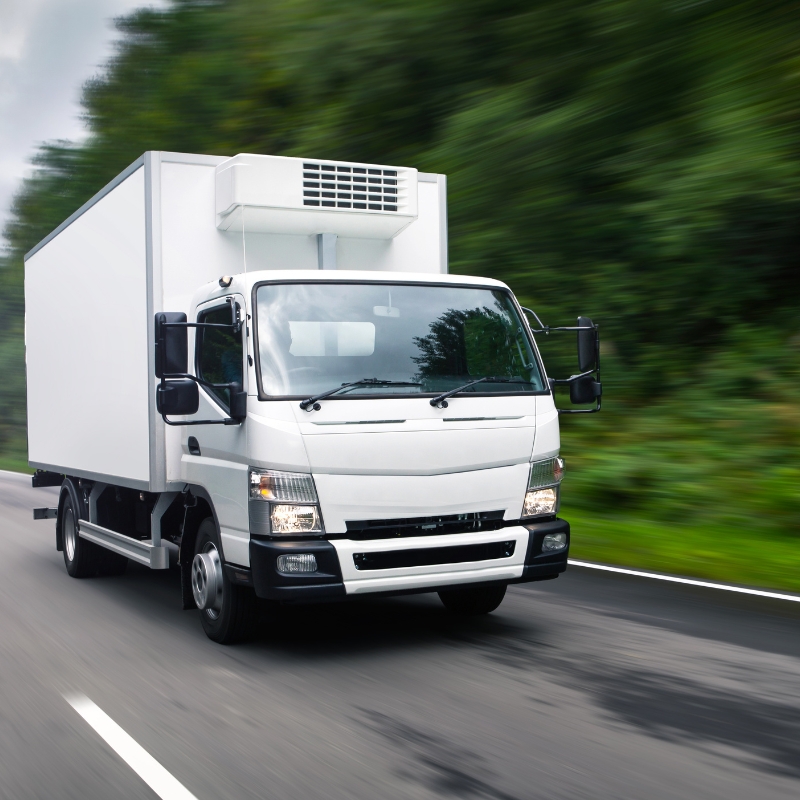
Light rigid vehicles sit in a sweet spot: bigger and more capable than a car or ute, but still compact enough to work through much of Sydney without the “big truck” footprint — and with the right LR licence, they open the door to a wide range of practical job opportunities. They’re the vehicles you’ll spot doing local deliveries, community transport, light commercial work, and trades runs where payload and cabin height matter.
This guide is vehicle-first (not salesy, not a licence explainer). You’ll learn:
• What typically counts as “light rigid” in NSW
• What these vehicles are commonly used for around Sydney
• What it actually feels like to drive one (turning, braking, mirrors, clearance)
• The habits that make light rigid driving smoother, safer, and less stressful in city traffic
Along the way, I’ll also point you to the official NSW definition so you can sanity-check the rules for your situation.
What is a light rigid vehicle in NSW?
In NSW, “light rigid” is a vehicle class defined by things like weight and passenger seating capacity. The short version is that light rigid vehicles are rigid (non-articulated) vehicles that are heavier than car-class vehicles but not as heavy as medium/heavy rigid categories.
For the formal thresholds and wording, the cleanest source is the NSW Government licence class definitions. Here’s the official page: NSW Government licence classes and conditions.
What matters in day-to-day terms is that “light rigid” usually means you’re driving a single-body vehicle (no trailer articulation) with enough mass and dimensions that the driving dynamics change: longer stopping distances, wider turns, bigger blind spots, and much more reliance on mirrors.
Common “light rigid” examples you’ll recognise in Sydney
Think of vehicles like:
• Small-to-mid rigid delivery trucks (often seen in industrial areas and metro deliveries)
• Furniture and appliance delivery trucks
• Some small buses and community transport vehicles (depending on seating)
• Work trucks set up for trades, equipment carriage, or light logistics
Even when two vehicles look similar from the kerb, the driving feel can differ a lot depending on wheelbase, load, suspension, and where the driver sits relative to the front axle.
Q&A: Is a light rigid vehicle basically a “bigger car”?
Not really. The biggest difference isn’t just size—it’s how the vehicle responds to steering, braking, and road camber when it’s carrying a load. If you treat it like a car (same gaps, same turning line, same mirror habits), it’ll feel unpredictable in tight Sydney traffic.
Typical sizes and weights, explained without the jargon
You’ll hear terms like GVM (gross vehicle mass). You don’t need to memorise numbers to drive safely, but you do need to understand what changes when mass and height increase.
Here’s what commonly shifts as you move into light rigid territory:
• The vehicle sits higher, so you see further ahead—but also miss what’s close alongside you
• The wheelbase is longer, so the rear wheels “track in” tighter than the front wheels on turns
• The body overhang (rear of the truck) can swing out on tight turns
• The load can move or settle, changing how the vehicle brakes and corners
• The stopping distance increases, especially in wet conditions or downhill
A simple way to think about it
If a car feels like it pivots under you, a light rigid vehicle feels like it “follows” you. You place the front where you want it, then manage what the back end does a second later.
That lag is where most first-timers get surprised—especially on Sydney roundabouts, left turns around parked cars, and tight driveway entries.
Common uses for light rigid vehicles around Sydney
Light rigid vehicles are everywhere in metro Sydney because they can:
• Carry a meaningful payload without jumping to a much larger footprint
• Fit into many loading zones where bigger trucks struggle
• Navigate suburban streets more realistically than heavy rigid vehicles
• Serve jobs where a van isn’t enough (volume or weight), but a larger truck is overkill
Where you’ll see them most often
• Trades and construction support: tools, materials, site deliveries
• Metro delivery work: furniture, appliances, packaged goods
• Events and logistics: staging, equipment, bump-in/bump-out
• Passenger transport: smaller buses and shuttle-style vehicles (depending on configuration)
Q&A: Why do so many delivery businesses prefer light rigid vehicles?
Because they balance capacity and access. In Sydney, access is half the job: tight streets, kerbside stops, and frequent merges mean a vehicle that can move with traffic (without being tiny) is hugely practical.
What driving a light rigid vehicle feels like (compared to a car)
This is the part most people want but rarely get in a clear, practical explanation. Here’s what you’ll notice in the first hour behind the wheel.
1) Seating position and “where the front actually is”
In many light rigid vehicles, you sit higher and closer to the front. That can make you feel like you’re “on top of” the road, which is great for scanning—but it can also trick you into misjudging:
• How close your front corner is to poles, kerbs, and parked cars
• How much room does your rear need to clear obstacles
• Where the vehicle’s true centreline sits in a lane
Practical habit:
• Pick a consistent “reference point” on the dash/wipers that lines up with the lane edge, and stick with it.
2) Steering input: slower, wider, more deliberate
Cars tolerate late steering and quick corrections. Light rigid vehicles prefer early set-up and smooth steering.
In Sydney, this matters most when:
• Turning left around parked cars (inner-west and older suburbs especially)
• Taking roundabouts with tight entry lanes
• Entering driveways that dip or rise sharply
Practical habit:
• Set up early. If you’re turning, aim to complete most of the decision-making before you arrive at the corner.
Q&A: Why do turns feel “bigger” even when the road is wide?
Because the rear wheels don’t follow the same path as the front wheels. The longer the wheelbase, the more the rear tracks inward on a turn. That’s why kerb clips happen—even when the front felt perfect.
3) Rear tracking and kerb clearance
This is the classic “I turned like a car and the back did something else” moment.
What’s happening:
• The front clears the corner first
• The rear cuts in tighter
• If you don’t adjust your line, your rear wheel can climb a kerb or scrape a gutter edge
Practical habit:
• Think “front clears, rear follows tighter.” If you’re close to the kerb with the front, you’ll be closer with the rear.
4) Tail swing (the part that surprises drivers in tight streets)
Tail swing is the rear of the vehicle swinging outward when you turn. It’s most noticeable with bigger bodies and rear overhang.
Sydney scenarios where tail swing bites:
• Turning out of a loading bay into traffic
• Leaving a kerbside stop with cyclists or cars close behind
• Tight turns near poles, signs, and parked vehicles
Practical habit:
• Before you turn, check the space around the rear—especially if anything is sitting close on the outside of your turn.
5) Braking and stopping distance
Mass changes everything. Even if the brakes feel strong, the vehicle needs more distance to stop—especially if it’s loaded.
Sydney situations where you’ll feel this quickly:
• Stop-start traffic on main roads
• Downhill runs (even gentle grades)
• Wet weather on painted lines, metal plates, and shiny intersections
Practical habit:
• Increase your following distance earlier than you think you need to. Smoothness beats “late braking.”
Q&A: Why does braking feel different when the vehicle is empty vs loaded?
Because weight shifts and suspension response change. An empty vehicle can feel bouncier and may react faster to inputs, while a loaded vehicle can feel more planted but needs more stopping distance. Either way, the safe approach is the same: anticipate, brake earlier, and keep it smooth.
6) Mirrors become your main tool, not a backup
In a car, you can shoulder-check and rely on peripheral vision. In a light rigid vehicle, your blind spots are larger and your sightlines are higher.
Practical habit:
• Set mirrors before you move, then use a consistent scan pattern: far mirror, near mirror, forward, repeat.
If you’re planning to build confidence quickly with structured practice, a good next step is to learn with guidance that matches Sydney roads and conditions—many learners start by reviewing the LR licence requirements in NSW, so the vehicle class and expectations are clear, then practise the core skills methodically.
Sydney-specific realities: tight streets, roundabouts, and clearance traps
Sydney driving isn’t just “busier.” It’s also physically tighter in many areas, with older streets, narrower parking lanes, and unpredictable kerbside behaviour.
Clearance: height and width surprises
Even a “small truck” can exceed the mental model you’ve built while driving a car. Common clearance traps:
• Low awnings and trees on suburban streets
• Carpark entries and height bars
• Temporary roadworks signage that narrows lanes
• Narrow residential streets with cars parked on both sides
Practical habit:
• If you’re unsure about clearance, slow right down and give yourself time. A rushed decision is how scrapes happen.
Roundabouts: choose patience over perfection
Roundabouts in Sydney can be tight, multi-lane, and full of late indicators. In a light rigid vehicle, the goal is not to “thread the needle,” it’s to be predictable.
Practical habits:
• Approach slower and earlier
• Prioritise smooth steering over quick corrections
• Use mirrors constantly—especially the outside mirror on exit
Peak hour gaps: don’t get bullied into car-sized gaps
One of the biggest confidence killers is trying to merge or change lanes like a car. You’re longer, you accelerate differently, and your stopping distance is bigger.
Practical habit:
• If the gap feels “car tight,” it’s probably tight. Create time: ease off, signal early, and let the traffic pattern present a safer opening.
Q&A: What’s the #1 “Sydney mistake” new light rigid drivers make?
Letting traffic pressure change their decisions. The fix is simple but not easy: stick to safe spacing and timing, even if it means missing one turn and taking the next.
A practical “first week” checklist for light rigid driving feel
Use this as a short habit builder. It’s not a pre-start mechanical inspection—just the driver habits that reduce stress.
Before you move
• Adjust the seat so you can steer without stretching
• Set mirrors so you see the vehicle edge and the lane beside you
• Plan your first 10 minutes: where you’ll turn, where you’ll stop, where you’ll merge
• Take one breath and commit to smooth, early decisions
While driving
• Keep a bigger space cushion than in a car
• Start turns earlier and slower
• Watch rear tracking in every left turn
• Scan mirrors in a pattern (don’t “random check”)
• Avoid last-second lane changes in busy areas
When parking or reversing
• Set up straight whenever you can
• Use small steering inputs
• Stop early and re-check your position
• If you can’t see it, don’t guess it
If you’re working toward structured skill-building, some learners find it helpful to align their practice with what’s assessed during training—this is where LR licence training in Sydney can provide a clear pathway for turning, reversing, observation, and safe vehicle control without trying to “figure it out” in live traffic.
Common beginner mistakes (and the simple fix for each)
Mistake 1: Turning like a car
Fix:
• Slow earlier, set up wider where appropriate, and remember rear tracking.
Mistake 2: Stopping too close to the vehicle ahead
Fix:
• Add the following distance before you feel you “need” it. Anticipate, don’t react.
Mistake 3: Underusing mirrors
Fix:
• Use a repeatable scan: forward, right mirror, forward, left mirror, forward.
Mistake 4: Reversing with big steering swings
Fix:
• Smaller inputs, slower movement, and stop to reset rather than forcing it.
Mistake 5: Rushing decisions under pressure
Fix:
• If you miss a turn, you miss a turn. A safe reroute beats a rushed squeeze.
Q&A: If I feel nervous driving a light rigid vehicle, is that a bad sign?
No. It usually means you’re aware the vehicle behaves differently and you’re respecting the risk. Confidence comes from reps and good habits, not from pretending it’s “just like a car.”
When to pause, reassess, or get help
This isn’t about fear—it’s about professional judgement. Pause and reassess if:
• You don’t know the vehicle height, and you’re approaching a low clearance
• Your mirrors can’t be adjusted to cover blind spots properly
• The load doesn’t feel stable, or you can hear shifting
• The route forces repeated tight turns in unfamiliar streets
• Weather reduces grip and visibility more than expected
If your goal is to step into light, rigid driving with less guesswork, a sensible next step is understanding the pathway to upgrade to an LR licence and then practising the exact skills that make these vehicles feel predictable: smooth turns, controlled braking, consistent mirror work, and calm decision-making in Sydney traffic.
FAQ
What counts as a light rigid vehicle in NSW?
The NSW Government defines licence classes (including light rigid) using vehicle characteristics like weight and passenger seating capacity.
What’s the biggest handling difference between a light rigid vehicle and a car?
Turning and braking. Rear tracking means the back wheels cut in tighter than the front, and increased mass means longer stopping distances—especially when loaded or in wet conditions.
Why do light rigid vehicles feel harder to reverse?
Because you’re longer, your reference points are different, and you can’t rely on shoulder checks the way you do in a car. Mirrors and set-up matter more, and small steering changes have bigger downstream effects.
Do I need to drive differently when the vehicle is empty?
Yes. An empty light rigid vehicle can feel bouncier and may react more sharply to braking and steering. The safest approach is still smooth, early inputs and larger safety margins.
What’s the safest way to handle tight Sydney streets?
Slow earlier, set up turns deliberately, watch tail swing and rear tracking, and avoid last-second lane changes. If you feel pressured, prioritise safety over pleasing traffic behind you.
How can I build confidence quickly?
Practice with structure: mirror set-up, consistent scanning, smooth turning lines, controlled braking, and low-speed reversing. Repetition plus a clear method beats “just driving around” in peak-hour conditions.